


7 Ways to Drink Wine Better in 2026 (From a Professional Sommelier)

Wine culture is changing. People are finding new ways to get the friendly lift that wine provides, asking better questions, and choosing meaning over volume.
As a professional Sommelier, I’m seeing a shift away from tried-and-true, toward curiosity, well-being, and connection.
Want to enjoy wine more and in different ways? Here are 7 ideas that reflect how thoughtful wine drinkers are approaching wine in 2026. Practices that make wine feel better in your body, more interesting in your glass, and more rewarding to share.
1) Drink More Water (Seriously)

Does that message sound like a broken record? OK, but drink more water! Some people experience headaches, facial flushing, or a “puffy” feeling when drinking wine, especially red wine. These reactions are often linked to naturally occurring compounds in grape skins, including histamines and flavonoids such as Quercetin. Sounds like an alien from a distant planet…the flavonoids from the Planet of Quercitin in the Galaxy of Anthocyanin. You should visit!
The simplest solution is also the most overlooked: drink more water.
Aim for one full glass of water for every glass of wine. Alcohol is a diuretic, so hydration matters, not just to prevent headaches, but to help your body process wine more comfortably.
Here’s why you want to drink water with your wine.
• Cleanses the palate
• Slows alcohol absorption
• Enhances aroma and flavor perception
• Supports digestion.
In short, better hydration = better wine experiences.
2) Seek Out Biodynamic Wines
Organic wines are a great start. Biodynamic wines go further. Better for you and the world.
Certified biodynamic vineyards operate as self-sustaining ecosystems, treating the farm as a living organism rather than an agricultural system. Might sound “new age woo” to some folks. But, biodynamic farming for wine has been happening for 400 years, before it was considered “a thing”. Look for the Demeter certification, which builds upon organic standards with rigorous whole-farm requirements, such as planting and harvesting in sync with the lunar calendar, having a forest and animals near your vineyard, and promoting the growth of natural plants that attract beneficial insects. It’s such a great system that eagles and hawks often fly over vineyards, thereby protecting the grapes from a potential attack by starlings.
Learn more about biodynamic certification at Demeter USA:

Notable biodynamic producers include
that I love:
• Château Ferrière (Margaux, France)
• Château Dufort-Vivens (Margaux, France)
• Antiquum Farm (Oregon)

• Cristom Vineyards (Oregon)

• Johan Vineyards (Oregon)
Much of Alsace, France also embraces biodynamic viticulture, producing wines with remarkable energy and transparency.
Try Domaine Weinbach Pinot Gris or Gewurtraniner. https://www.domaineweinbach.com/
3) Don’t Be So Loyal
It’s easy to default to familiar regions, Oregon Pinot Noir, Washington Merlot, or California Cabernet Sauvignon. But curiosity is where the joy lives.
Start by trying the same grape from a different place:
• If you love Pinot Noir, try the soft, floral, and lightly oaked Hamilton Russell Pinot Noir (South Africa) https://www.hamiltonrussellvineyards.com
• If you love Sauvignon Blanc, then try the notes of guava and passion fruit found in Dog Point Sauvignon Blanc from New Zealand https://dogpoint.co.nz/
• If you love rich, lush Cabs, then try the dark fruit and mocha mint notes of Xanadu Cabernet Sauvignon from Australia https://xanaduwines.com/varieties/cabernet-sauvignon/
Then stretch further:
• Light and earthy Orange wines from Friuli Venezia Giulia https://www.gravner.it/#lang
• Juicy and rustic Qvevri-aged Saperavi from Georgia https://ghvinos.com/pages/our-mission
• Rich and herbal Feudo Montoni Perricone, a soulful red grape from Sicily https://wilsondaniels.com/winery/feudo-montoni/
Are you a member of several wine clubs? Maybe time to take a break and mix it up. Consider quitting one wine club this year and asking a Sommelier to select bottles you wouldn’t choose yourself. New habits begin with curiosity.
4) Mix Light, Medium, and Bold
Instead of opening one bottle with dinner, try opening three wines at once to provide variety, contrast, and new sensory experiences. Wine evolves with more time, oxygen, and temperature, and tasting side-by-side sharpens perception.
For example:
• A light Gamay (Beaujolais)
• A medium-bodied Merlot
• A bold, oak-aged Cabernet Sauvignon
Comparative tasting reveals structure, texture, and balance, and often challenges assumptions about pairing. Experiment. Take notes. Trust your senses. Make a mental notes of the differences and notice how you sense the wine before, during and after combined with foods on your table.
5) Don’t Fear the Screw Cap
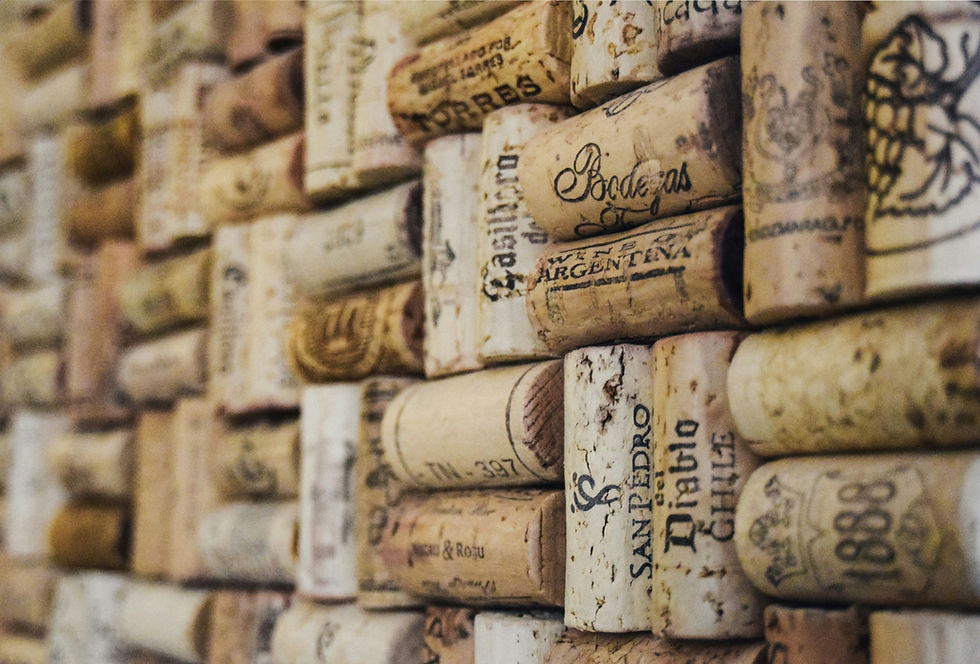
Natural cork is beautiful, traditional, and is a renewable resource. Cork is derived from a special oak tree grown in Portugal, Spain, Morocco, Algeria, and Italy. The trees are harvested every nine years or so and then regenerate the corky inside bark. Many age-worthy wines still rely on it for slow oxygen exchange over decades, which enhances the flavors and aromas of wine as it matures. But screw caps deserve respect.
Widely adopted by Australia and New Zealand, screw caps:
• Eliminate cork taint (TCA), which is also becoming rare these days
• Preserve freshness
• Ensure consistency
• Offer convenience for travel and casual settings
For most wines meant to be enjoyed young, screw caps are technically superior. Both closures have a place. Dogma does not. So, when it comes to screw tops on nice wines, you can let that one go.
6) Dig for the Story
You usually know if you like a wine within a few sips. But knowing why deepens enjoyment.
For example, “I like Pinot Noir” is a starting point, not a conclusion. There are more than 1000 different Pinot Noir wines in Oregon alone. More in France’s Burgundy region. Then, there are fabulous Pinot Noir in Chile, New Zealand, South Africa, Corsica. Plus, there are at least 20 widely used clones of Pinot Noir grapes that affect the flavor and aroma.
Style matters. So, what type of Pinot Noir do you prefer?
• De-stemmed or whole cluster?
• Native or cultured yeast?
• Oak or neutral vessels?
• Type of oak? Toast level?
• Length of aging?. Black fruit or red Fruit?
Wine is culture, agriculture, and intention in liquid form. Stories matter. Dig into the details or ask your favorite professional Sommelier for more guidance.
7) Drink Less. But Better.
Many people are drinking less, and that’s a good thing, or at least a well-deserved personal preference.
Instead of three "very good" bottles of wine, buy one exceptional bottle. Instead of overflowing wine clubs, curate intentionally. Wine clubs can get monotonous. They are exciting souvenirs of great experiences. But, maybe one or two shipments are enough?
Instead, add some variety to your wine experiences. Visit wine bars. Attend private tastings. Work with a Sommelier to create a unique and personalized event.
Consider using a Coravin, which allows you to pour a glass without opening the bottle:
👉 https://www.coravin.com. It’s one of the smartest tools ever created for drinking better, not more.
Final Thought
The best wine experiences in 2026 won’t be about volume or status. They’ll be about presence, curiosity, and care for the land, the people who made the wine, and the people you share it with. To elevate your 2026 wine experience, consult with your local Sommelier.


